
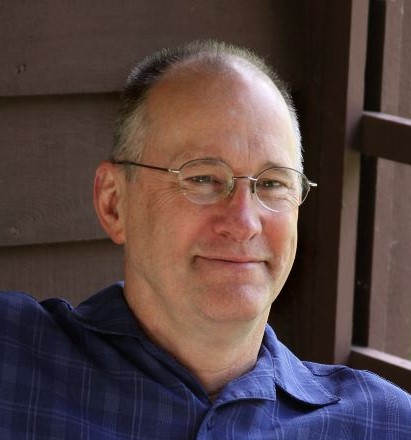
Wealth7 Wealth Is An Addiction Philip Gulley
I visited my alma mater, Marian University, several weeks ago. I had met the president, and he invited me to tour the campus with him, so off we went on a golf cart and saw the sights. I think he thinks I have more money than I actually have because he brought along the head of advancement who spoke to me about making a legacy gift to the university. But they were both fine people, very kind-hearted. It made me wish I had a legacy gift to give them.
We drove past Marian Hall where I’d had all my classes, and while driving past, I remembered a sociology class I had taken there, taught by a professor I admired named Bill. When I pastored Irvington Friends Meeting, Bill began attending and when he married, I officiated at his wedding. But even the best teachers are wrong sometimes, and I remember him telling me that alcoholism wasn’t a disease. “Show me the diseased organ,” he said.
When I realized my father was an alcoholic, and other family members spoke about it as a disease, I was adamant that it was not a disease, that it was a decision, a behavior, and that Dad had to decide not to be an alcoholic. What I didn’t know is that our medical and psychological understanding of addiction had evolved. Doctors were defining addiction as a chronic brain disease characterized by compulsive and uncontrollable engagement in a substance or behavior despite negative consequences.
The brain is the diseased organ, and the engagement is not just with a substance, but with a behavior, such as gambling, sex, internet use, shopping, or in our case, the obsession with wealth. We’ve been thinking about wealth, its role in our culture, and its effect on us. This week, I’ve been thinking about the craving some people have for money and now wonder if the pursuit of wealth can be an addiction, perhaps even a common addiction.
Let’s start by thinking about a billion dollars. If we worked forty hours a week for forty years, starting at age 25 and working until we were 65, we would have to earn a little over $12,000 an hour to become a billionaire. The average annual salary in America is $60,000, which means that after five hours of work on his first day of work, the billionaire has already earned the average annual salary. Now every billionaire I’ve ever read about is obsessed with one thing—getting his next billion. Because $12,000 an hour apparently isn’t enough. When we’re already spectacularly wealthy, but still crave more, still devote every waking hour to having more, at the expense of our relationships, our physical health, and our mental well-being, we are addicted. Addictions always cost. Our longing for one thing always comes at the expense of another thing. We don’t even have to be billionaires to be addicted to wealth. We only have to be so determined to attain more that we’ll jeopardize everything else to have it. This is why the alcoholic is willing to lose his family, why the drug addict is willing to lose her children, why the obscenely wealthy are willing to lose everything and everyone they claim to value. Addictions always cost.
The worst thing about an addiction to wealth is that we end up putting a price on anything and everything. Someone or something’s value is determined by their capacity to enhance our bottom line. So the wealthy marry those who will make them wealthier. The wealthy befriend those who will make them wealthier. They don’t pick vocations based on their satisfaction or usefulness, but by that vocation’s capacity to make them rich. Everything is transactional. Everything has a price. The neighborhoods we live in, the cars we drive, the colleges we attend, the churches and clubs we join.
I know money is a consideration in our daily affairs, but it should never become a fixation. When wealth becomes the overarching goal of our lives, when it becomes our addiction, we are in jeopardy of losing anything and everything to have it.
We were in Tennessee last weekend celebrating our grandson’s third birthday. Have you ever held a child or grandchildren and thought to yourself, “I would do anything in the world to help this child.” There’s no describing the depths of love you feel. You don’t even have to be a grandparent to feel that kind of love. My brother and his wife don’t have grandchildren, and likely never will. But their son married a woman whose sister has two little girls, and those girls think my brother and sister-in-law are their grandma and grandpa. They love those girls with the love of a grandparent. I can tell by watching them.
Now here’s what an addiction to wealth will do to you. When John Paul Getty III was kidnapped at the age of sixteen, his grandfather, John Paul Getty Sr., the richest man in the world, refused to pay the ransom demanded by the kidnappers. Eventually, after his grandson’s ear had been amputated, Getty Sr. agreed to pay 2.2 million dollars, the maximum amount that was tax deductible. He only agreed to pay the rest of the ransom if his son, his grandson’s father, paid him four percent interest on the balance.
At the time of his death, he was worth six billion dollars. The Oxford Dictionary of Quotations has only quote from him. “If you can actually count your money, then you are not really a rich man.” How is that not deeply sick? How do you quibble over your grandchild’s ransom even as they mutilate him, sending you his body parts in the mail?
When Elon Musk was appointed to cut government spending, he was worth 408 billion dollars. If you’re interested in comparison, that means if Elon Musk was working 40 hours a week for forty years, he was making 4.9 million dollars an hour. So what did he do when asked to cut government spending? He cut the programs feeding tens of millions of the world’s poorest children. Now it is believed projected tens of thousands of children will starve to death. Wealth is so insidiously addictive, you not only claw to yourself all your own money, but also the money meant to feed the most vulnerable and innocent among us.
In 1933, in the depths of a stubborn Great Depression, the federal government established a minimum wage. Today, we are in a Second Gilded Age, when a small group of wealth-addicted men rule our nation, eating their cake and ours too. How fitting it is that addiction has been called “the disease that makes you too selfish to see the havoc you’ve created or care about the people whose lives you have shattered.” We are now nine decades into minimum wage. I say it is long past time we employ a maximum net worth, a cap on personal and corporate wealth, so that the sons and daughters of the world’s poor can have a glimmer of light amidst the darkness of their squalor.
Since it is obvious the wealthy will not admit their addiction and address it, it is incumbent upon us to intervene, to say as a nation, “You have a problem. It is destroying our world. We cannot and will not let this continue.” In this instance, the diseased organ is not just the brain, but also the heart, so calcified by greed it has hardened to stone.