
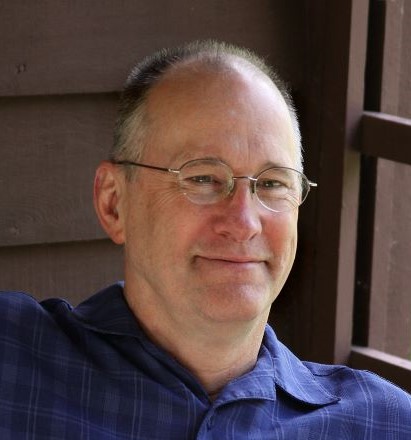
In 1975, Lee and Mary Lee Comer moved in next door to our family and within a few months invited me to attend the Quaker youth group they led. Their invitation came at an opportune moment since I was growing disenchanted with the Roman Catholic Church. Our longtime priest had retired and we had been assigned a cranky, nagging priest, who, when I confessed my sins, would pile on the penance. If it had been allowed, I think he would have flogged me on the courthouse lawn. So when the Comers invited me to Quaker meeting, they found a receptive audience.
I didn’t know it at the time, but my decision to attend the Quaker youth group became a defining moment in my life. We all have defining moments. They are those times when something happens that profoundly changes our life trajectory. They can be dramatic, like marriage, or the death of a loved one, or a career change, or they can be quiet—a conversation, a small decision. They may not have felt significant when they happened, but later stood out as shaping who we are. So I walked across the yard to the Comer’s house for Quaker youth group, not knowing that walk would change my life. The following Sunday, I went to Quaker meeting for the first time.
The pastor was named Jim. He had grown up Baptist, but had recently married a Quaker, and had become a Quaker pastor when his father-in-law had been assigned the task of finding a new pastor. We’re going to be a bit more deliberate in the search for my replacement. While Jim wasn’t well-versed in Quakerism or theology, I liked him. He was fun and approachable, something I wasn’t accustomed to among the religious leaders I had known. He preached that morning, but I can’t remember a word he said. What I do remember is that when we settled into silence, a woman in the meeting stood and suggested he hadn’t given the morning topic as much thought as he should have. In all my years in the Catholic Church, I had never seen this done, and was certain the woman would be dragged from the meetinghouse and flogged on the courthouse lawn, but to my utter amazement that didn’t happen. Instead, the pastor thanked her for giving him something to think about.
That became another defining moment for me, changing my life’s trajectory. I had grown uneasy with religious hierarchy. I was weary of being told what I could and couldn’t believe, what I must and mustn’t do, so to witness the ecclesial freedom to disagree with a cleric was exhilarating. Decades later, when I was told by our Quaker superintendents that I could not write or say anything contrary to our yearly meeting’s Faith and Practice, I thought, “No, you don’t. Quakers don’t do that.”
That’s when I knew why I remained a Quaker, when I would not bow to orthodoxy or tremble under the weight of ecclesial tyranny.
Earlier this week, we sent an email to the meeting asking you to complete this phrase, “You might be a Quaker if…”
What we’re inviting you to do is to recall when you realized you might be a Quaker. What we suspect is that while our Quaker numbers are numerically modest, the principles we embrace are universal. Of course, some of these might be humorous. You might be a Quaker if you drive a Subaru or Prius, and brake for squirrels. You might be a Quaker if you wear sensible shoes and own lots of sweaters.
Or it can be more serious. You might be a Quaker if you believe everyone has the Light of God within them.
You might be a Quaker if you are troubled by war.
You might be a Quaker if you believe everyone should have a say.
Or in my case, you might be a Quaker if you are uneasy with religious hierarchy.
Dear Readers, I invite you, whether Quaker or not, to finish the sentence too, and at as a comment to this post. You might be a Quaker, if….